
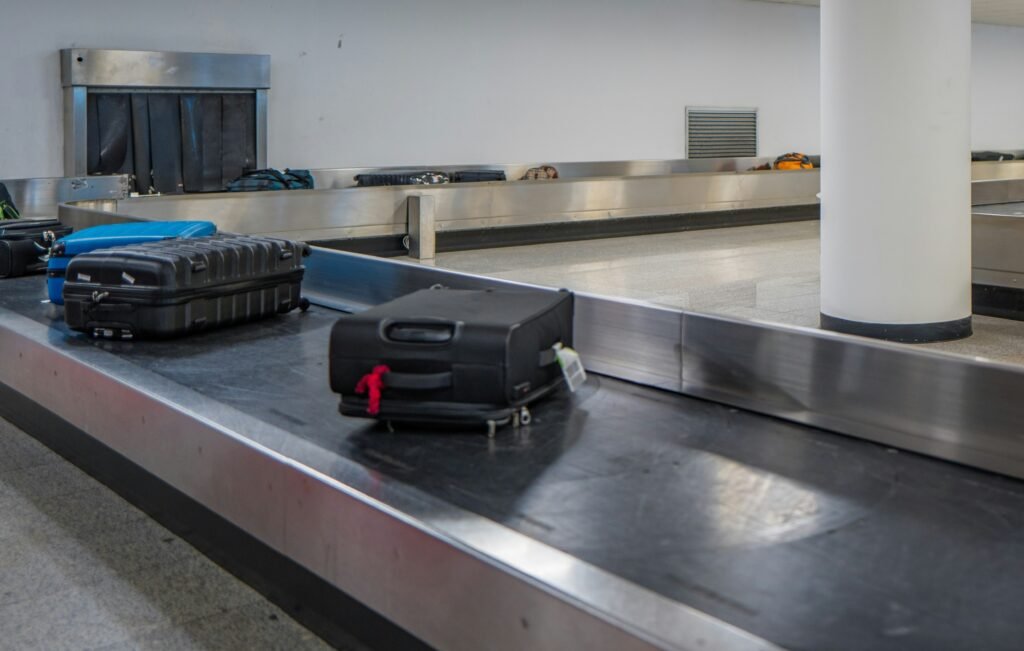
People assume cruising is what wears luggage out, all those port days, tender boats, porters hauling bags down narrow gangways. In my experience it’s actually flying that does the real damage. A cruise line’s baggage handling is generally careful, your bag goes from the pier to your cabin without much drama. Airlines are a different story entirely, and if you’re flying to your embarkation port, which most of us are, your luggage needs to survive that gauntlet before the cruise even starts.
Durability under airline handling is the real test
I learned this the hard way with cheaper luggage early on, wheels cracking, zippers failing, the kind of damage that shows up after a handful of flights rather than years of use. What actually matters in a suitcase isn’t how it looks in the store, it’s how the wheels, the handle, and the corners hold up after being thrown around a baggage system that wasn’t designed with your bag’s feelings in mind. This is where spending more upfront tends to pay off, cheaper luggage often fails at exactly the moment you need it most.
Warranty coverage matters more than people think
A strong warranty isn’t just a nice extra, it’s part of what you’re actually paying for. Briggs & Riley has built its reputation on this, recently named the top luggage brand in Condé Nast Traveler’s own Readers’ Choice Awards, an unconditional lifetime warranty that covers damage regardless of cause, including airline damage, with no fine print to argue about. Travelpro has a similar strength specifically around airline-caused damage, which matters if you’re a frequent flyer. Samsonite’s warranties are solid but more limited, typically a set number of years rather than a lifetime guarantee, and some owners have found cracked hard shells fall outside what’s covered. When you’re comparing suitcases, it’s worth reading the actual warranty terms rather than assuming “lifetime” always means the same thing across brands.
This is a big part of why I’ve stuck with Rimowa for my own bags, a cabin case from their aluminum Original line and a large polycarbonate checked piece from their Essential line. The warranty support has been real when I’ve needed it, and that mattered more to me than any single feature.
Brands worth knowing about
Beyond what I currently use, I’ve had good experiences with a few others over the years. Tumi has held up well and has the kind of premium build quality you’d expect at that price point, now under the same parent company as Samsonite. Samsonite itself has served me well for years, reliable and reasonably priced, even if the warranty isn’t as generous as some competitors. I’ve also had good stretches with London Fog. None of these are wrong choices, and the right one depends more on how you travel and what you’re willing to spend than any single “best” answer.
Packing cubes do more work than people expect
Regardless of the suitcase itself, packing cubes have made the biggest practical difference for us. Separating things into cubes means you’re not digging through a jumbled bag trying to find where you packed the underwear, everything has a place and you can find it in seconds. It also makes repacking at the end of the trip faster, since everything already has a home to go back into.
How much luggage we actually bring
We typically travel with a checked bag and a carry-on each, not just for space but for peace of mind. If a checked bag gets lost or delayed, having the basics in a carry-on means the start of the trip isn’t derailed while you wait for it to catch up, the same logic behind the carry-on habits I get into in Packing for a Cruise When You’ve Done It 40+ Times. On longer trips, say a seven night cruise combined with a few extra days at a hotel beforehand or after, my wife will sometimes bring two checked bags instead of one, which just makes sense when the trip itself is longer and the packing list grows with it.
What actually matters
None of this is really about chasing a specific brand name. It’s about durability that holds up to how you’ll actually travel, a warranty you can trust if something does go wrong, and a packing system that keeps the whole process simple. The suitcase you land on should fit how you travel, not just what looks good in a store display.