I don’t have kids myself, so this one’s built entirely on research rather than personal experience. If you’re planning a family cruise and trying to figure out which line’s kids club actually fits, here’s how the major programs stack up against each other.
Royal Caribbean, Adventure Ocean
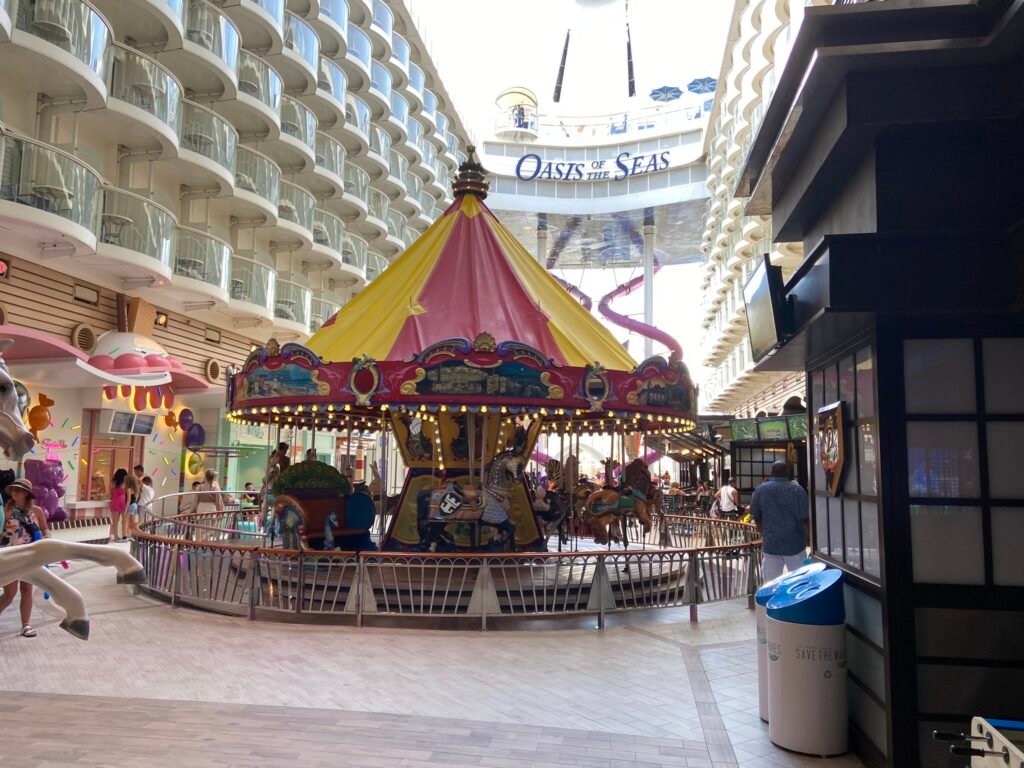
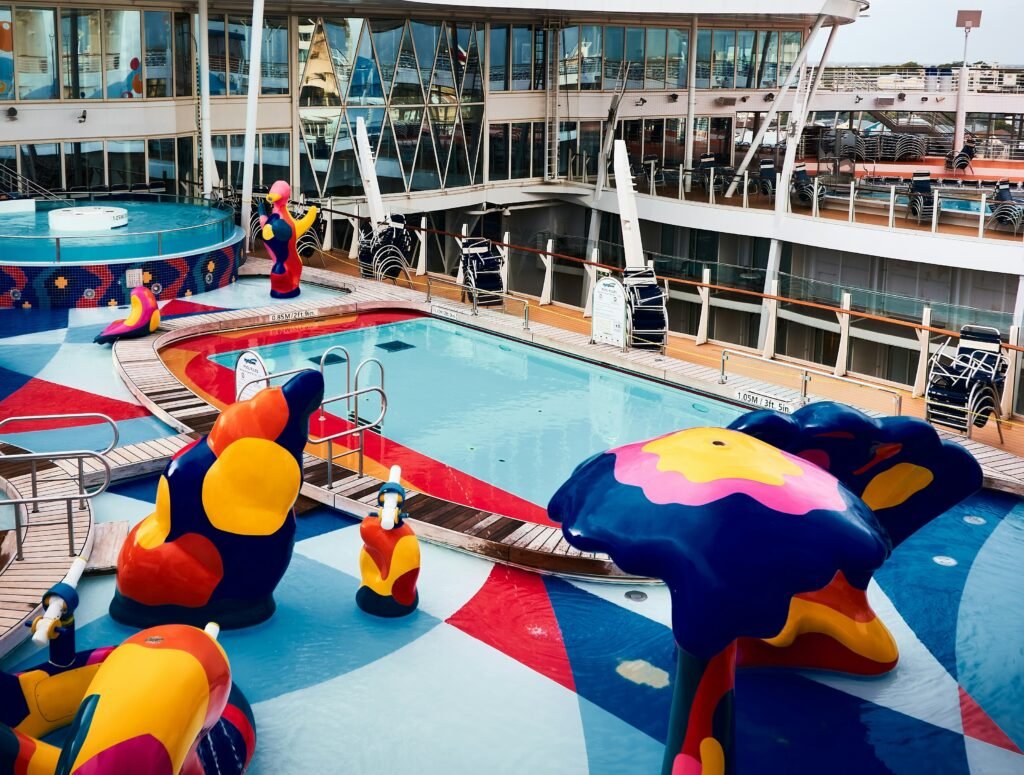
Royal Caribbean’s Adventure Ocean is one of the most established programs in the industry, available fleetwide and split by age into Aquanauts (3 to 5), Explorers (6 to 8), and Voyagers (9 to 12 or 13, depending on the ship). Newer ships like Icon, Utopia, Wonder, and the rest of the biggest classes simplify this into just AO Babies and AO Kids instead. It’s free until 10pm for kids age 3 and up, with an hourly fee after that if you want to keep the evening going. Bigger ships in the fleet, Oasis and Icon class especially, dedicate close to 30,000 square feet to kids’ facilities, including a full Adventure Ocean Theater where kids can watch or perform in shows. Teens get their own separate space entirely, so it’s not just younger kids getting the dedicated real estate.
Celebrity, Camp at Sea
Celebrity’s Camp at Sea leans more toward hands-on, STEM-style activities than pure entertainment, science experiments, art projects, and structured learning woven into the fun rather than kept separate from it. It’s aimed at ages 3 to 17, broken into similar age bands as most competitors. Some ships add extras like kid-focused lunch, dinner, and even slumber party nights, which gives parents a genuinely free evening rather than just a few afternoon hours. Celebrity’s overall vibe skews a bit more premium and adult-focused as a brand, so Camp at Sea tends to feel smaller and more intimate than the mega-ship kids’ zones on Royal Caribbean, better suited to families who want supervised activity time without a massive, loud complex built around it.
Norwegian, Splash Academy
Norwegian’s Splash Academy covers ages 3 to 12, with separate space for teens under a program called Entourage. The best version of this exists on Norwegian Breakaway and Getaway, where Splash Academy spans two full decks and includes a soft play area for babies and toddlers, letting parents get down on the floor with the youngest kids in a dedicated space rather than squeezing into a general play area. Activities range from circus school to team-building games to full fashion shows and pirate nights, genuinely varied programming rather than just a room with toys and a counselor. Worth checking before you book though, not every Norwegian ship carries youth programming, Norwegian Spirit specifically has none at all.
Disney, Oceaneer Club
Disney’s Oceaneer Club is the most heavily themed program on this list by a wide margin, spaces designed around Star Wars, classic fairy tales, and Mickey and Minnie rather than generic playrooms. Newer ships add The Hideaway, a lounge-style space for older teens with a DJ booth, less structured activity time and more of a hangout spot to socialize independently. Disney also offers nurseries for kids under 3, a feature not every line provides. If character immersion and theming matter more to your kids than the specific activity schedule, Disney is built entirely around that idea in a way no other line fully matches.
Carnival, Camp Ocean
Carnival’s Camp Ocean runs fleetwide and separates kids into clear tiers, younger kids, tweens, and teens, with themed events like Dr. Seuss activities, Build-A-Bear workshops, and Space Cruisers programming mixed into the schedule. Carnival accepts younger children than most competitors, sometimes as young as two and even those still in diapers depending on the specific program, which is worth knowing if you’re traveling with a toddler and don’t want to be shut out of youth programming entirely.
MSC, Doremiland
MSC’s Doremiland runs fleetwide from babies through age 17, and newer ships like MSC World America are adding more age-specific rooms along with extras like teen nights and a Lego-themed game show. It’s less discussed in the US cruise conversation than the bigger American lines, but the age range and fleetwide availability make it a genuine option worth comparing rather than an afterthought.
Princess, Camp Discovery
Princess’s Camp Discovery, developed with Discovery, splits kids into three groups, The Treehouse, The Lodge, and The Beach House, covering ages 3 to 17. It runs long hours, generally 9am to 10pm with breaks for meals, but space isn’t always guaranteed, so it’s worth checking availability rather than assuming a spot is automatic once you’re onboard.
The practical differences that actually matter
Beyond the theming and activity variety, a few things are worth checking before you book regardless of which line you’re leaning toward. Potty training requirements are close to universal for the youngest age bands, Carnival being the exception. Evening hours and whether they’re free or fee-based vary line by line, worth knowing if you’re planning on using the club into the night rather than just daytime hours. And ship size matters more than the program name, the same kids’ club brand can look completely different on a smaller, older ship versus one of the newest mega-ships in the fleet, so it’s worth checking what a specific ship actually offers rather than assuming the whole brand delivers the same experience everywhere.