Cruise packing lists tend to balloon fast, half of what shows up on them is filler. If you want the full packing rundown, that’s covered elsewhere, this list is narrower, the ten accessories worth adding on top of the basics. These solve real, specific problems you’ll actually run into onboard, limited outlets, metal cabin walls, thin doors, and days where your phone dies before dinner even starts. Nothing here is exotic or expensive, and none of it requires a specific brand loyalty, these are just the categories worth spending a little money on before you leave.
1. A cruise-approved power strip
Cabin outlets are one of the most consistent complaints in cruising, older ships in particular often have just one or two. A multi-outlet power strip solves this, but the catch is that most cruise lines prohibit traditional power strips with surge protectors as a fire safety rule. Look specifically for one labeled “cruise-approved” or “non-surge protected,” those are built to get through security without getting confiscated.
2. A slim portable charger
Between navigating a new port and using your phone as a camera all day, cruise days drain batteries fast. A slim, pocket-sized portable charger in the 10,000 to 20,000 mAh range covers a full device charge or two without adding real weight to a daypack. Built-in charging cables are worth paying a little extra for, it’s one less cord to lose in the cabin.
3. Magnetic hooks
Cruise cabin walls are metal, which means magnetic hooks work almost everywhere in the room, the wall, the bathroom, even the ceiling in some cabins. Most staterooms only come with one or two built-in hooks, nowhere near enough for wet swimsuits, jackets, hats, and bags. A set of heavy-duty magnetic hooks turns a cramped cabin into something with real storage. One caveat worth knowing, Norwegian Cruise Line doesn’t allow door decorations of any kind, so if you’re sailing NCL, stick to hooks on interior walls rather than the door itself.
4. Packing cubes
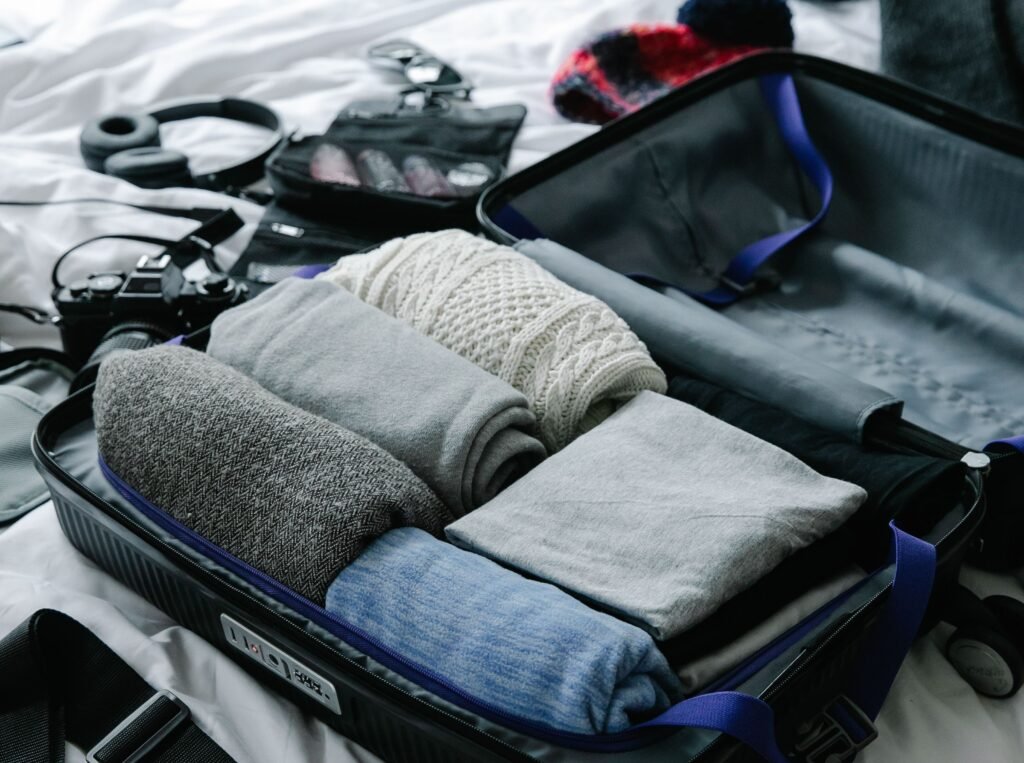
Packing cubes don’t save space so much as they save sanity, being able to grab a cube instead of digging through a suitcase makes a real difference on port-heavy itineraries where you’re repacking a day bag every morning. Mesh-top cubes are worth the small upcharge over solid fabric since you can see what’s inside without unzipping everything.
5. A luggage scale
A $15 luggage scale pays for itself the first time it saves you an overweight bag fee, which can run well past what the scale itself costs. It’s a small, light item that takes two seconds to use at the hotel or cabin before heading to the airport for the flight home.
6. An RFID-blocking wallet or passport holder
Ports are tourist-dense by design, which also makes them a target for skimming. An RFID-blocking wallet or passport sleeve is inexpensive insurance, it’s not going to make or break a trip, but there’s no real downside to having one either.
7. A universal travel adapter
If your cruise calls anywhere outside the US, a universal adapter earns its spot in the bag. Look for one with both USB-A and USB-C ports built in, that way it doubles as a charging hub instead of just a plug shape converter.
8. Compression socks
Long flights connecting to embarkation day, plus hours standing around in port lines, add up. Compression socks reduce general leg swelling and fatigue for most travelers, and medical guidance specifically recommends them for anyone at higher risk of blood clots (due to age, pregnancy, prior clotting history, or limited mobility) on flights over four hours. Even without those risk factors, plenty of travelers find their legs simply feel better after a long day of flights and lines.
9. A collapsible water bottle
Ship tap water is genuinely safe to drink, it’s treated, filtered, and regulated under the CDC’s Vessel Sanitation Program, the same standard covering everything from the cabin bathroom to the dining room. Having your own bottle means not paying for water onboard or relying on tiny cabin cups. Port destinations are a different story, water quality varies by location, so stick to bottled or ship-filled water once you’re off the ship for the day. Collapsible or soft-sided bottles pack flat when empty, which matters more on a cruise than it sounds, packing space is already tight without a rigid bottle taking up a fixed amount of room the entire trip.
10. A daypack that packs down small
Whatever bag you’re carrying off the ship on port days doesn’t need to live in your suitcase as dead weight the rest of the trip. A daypack that folds down to the size of a fist is worth the small investment, useful in port, easy to store in a drawer the rest of the cruise.
The short version
If you only pack three of these, make it the power strip, the portable charger, and the magnetic hooks, those three solve the most common complaints about cruise cabins specifically. Everything else on this list is genuinely useful, but those three are the ones that fix problems you’re guaranteed to run into rather than ones you might.